Sarah Kane

Email: sgk27 [at] cam.ac.uk

I am a third year PhD student at the Institute of Astronomy at the University of Cambridge, where I am supervised by Vasily Belokurov and Stephanie Monty. My research interests broadly lie in the field of stellar spectroscopy and Galactic archeology. I am originally from the US, and prior to beginning my PhD at Cambridge, I completed my Bachelor’s degree at the University of Pennsylvania.

As a legally blind astronomer, I am also passionate about inclusivity in science and disability advocacy. If you are also interested in these topics or are a disabled scientist or student, please do reach out!

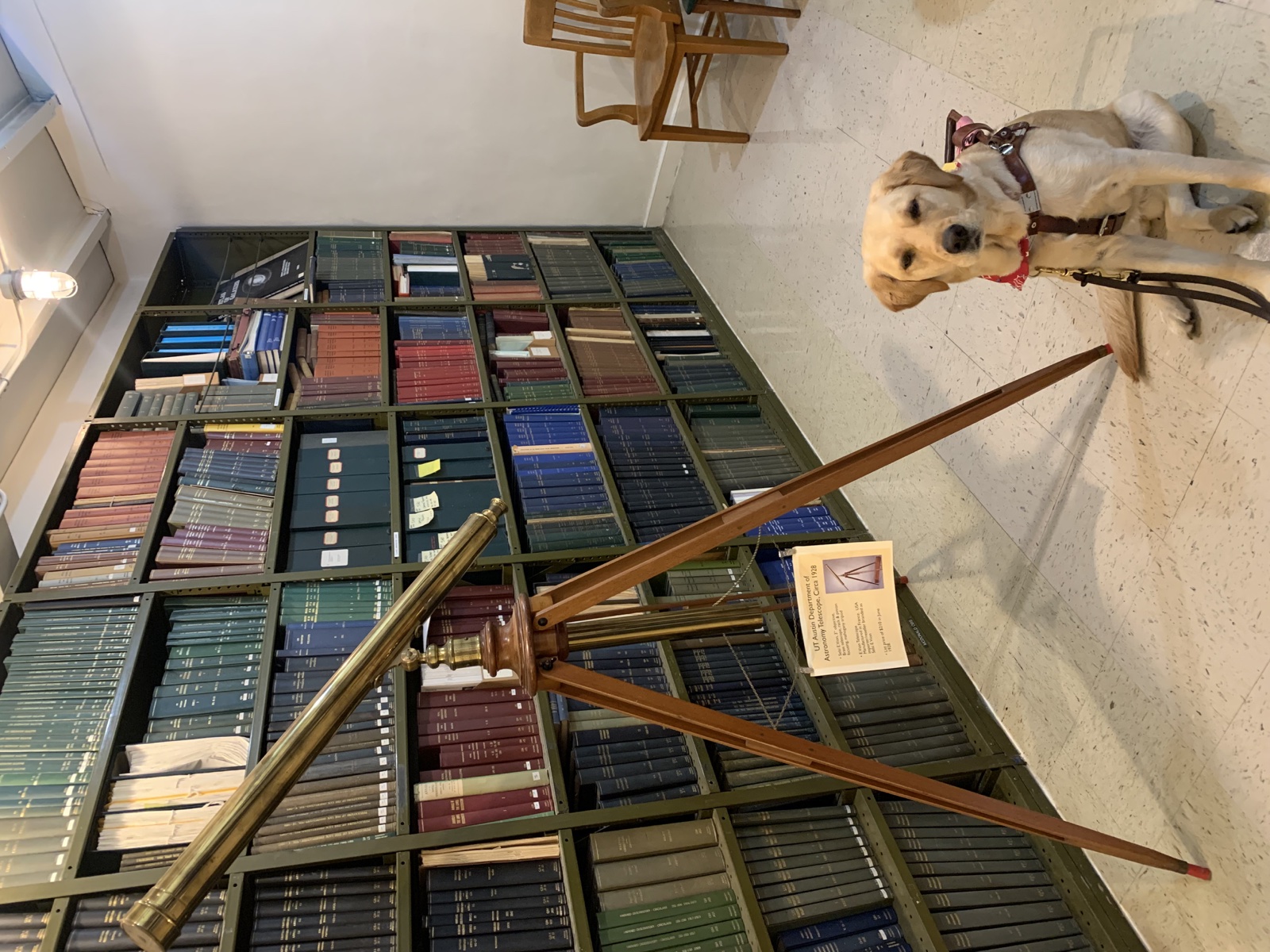
Outside of work, I enjoy spending time with my dog, Elana, rollerblading, playing goalball (blind sport), and reading science fiction and fantasy novels. I am a beta reader for the fantasy author Brandon Sanderson.
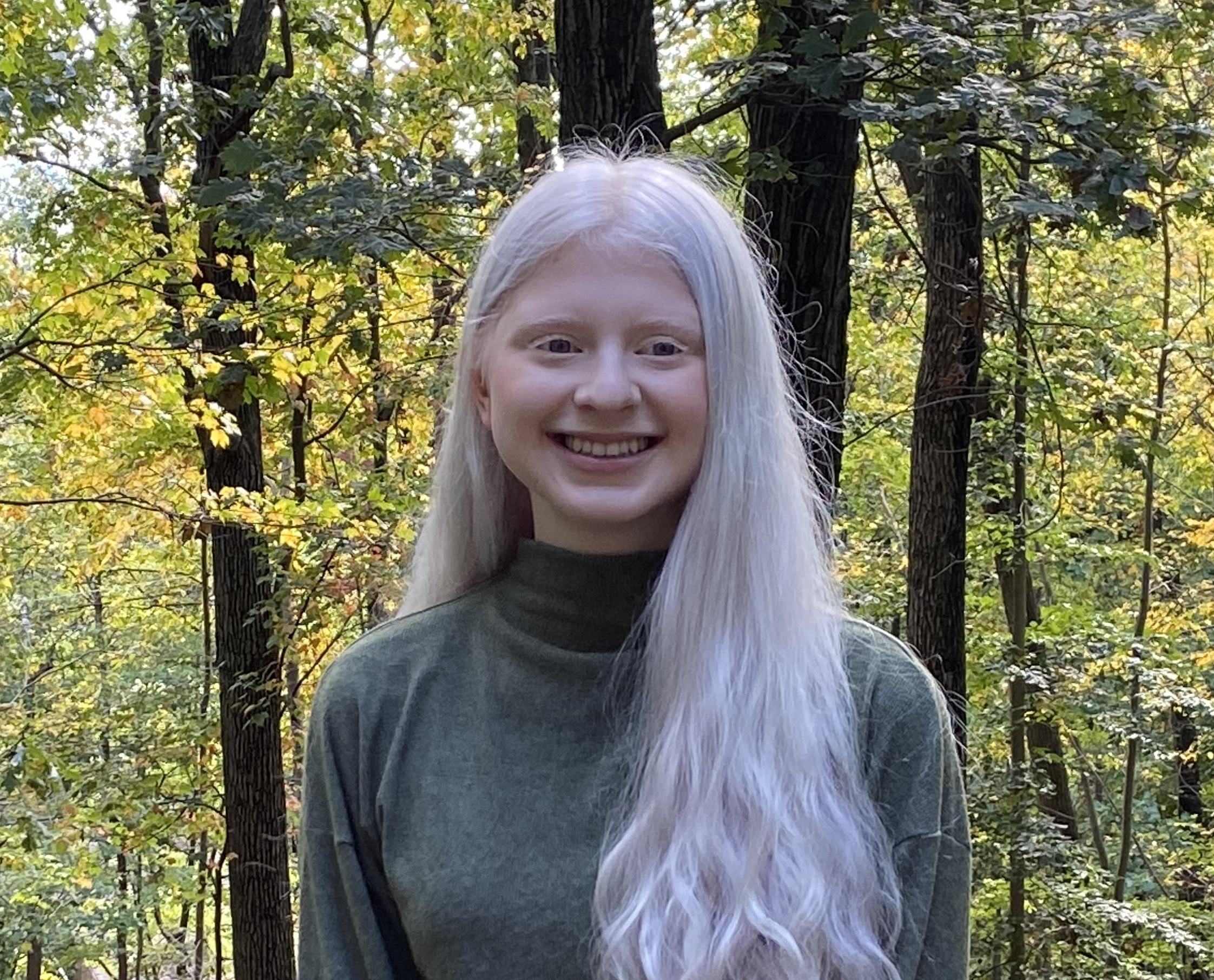

Sarah Kane, a woman with albinism and long white-blond hair, wearing a dark green high-neck sweater outdoors in a wooded setting.

Research

My research uses stellar spectroscopy to understand how the Milky Way evolved and was enriched over cosmic time.

Globular Clusters

Globular clusters are groups of thousands to millions of densely-packed stars and are hypothesized to be important building blocks for the early Galaxy. I am especially interested in stars with chemistry consistent with having formed in a globular cluster that have "escaped" their birth cluster into the Milky Way field. Such stars are invaluable tracers of disrupted and dissolved star clusters.

Data-Driven Spectroscopy

I build machine learning tools for large stellar surveys including Gaia and GALAH, using spectra to infer abundances, classifications, and rare stellar populations in an era of large astronomical surveys.

Chemically Peculiar Stars

The stranger, the better! I am interested in the Galaxy's weirdest stars and what they can tell us about unique formation environments and enrichment sources. Recently, I have been especially interested in metal-rich europium-enhanced stars and what they can tell us about the rapid neutron capture process.

Publications

A full list of my publications can be found at this SciX library. Below are links to my first or co-first author publications.

2026

Snapshots of r-process production in the Milky Way disk

Sarah G. Kane, Stephanie Monty, Madeleine McKenzie, HanYuan Zhang, Sven Buder, Terese Hansen, Tadafumi Matsuno, Jason Sanders, Anke Ardern-Arentsen, Vasily Belokurov, Zofia Kaczmarek, and Andrew Garner

Abstract

Stars enhanced in heavy neutron capture elements like europium (Eu) provide a window into the rarest and most exotic nucleosynthetic events. Most Eu-enhanced stars discovered thus far are found among metal-poor populations, with [Fe/H] < -1.0. Here, we report the discovery of 17 vetted Eu-enhanced stars ([Eu/Fe] > 0.7) in the Milky Way disk with metallicities in the range -0.87 < [Fe/H] < -0.21 identified from among 74,717 stars in the GALAH survey. 14 of these stars additionally have [Ba/Eu] < 0, marking enhancement from the rapid neutron capture (r-) process and making these r-II stars. Included in their number is a star with a remarkably high [Eu/H] = 1.01 ± 0.09 at [Fe/H] = -0.21. In addition to Eu, all 17 stars show enhancements in other neutron capture elements, especially in Nd, while otherwise appearing chemically consistent with typical disk stars, particularly in their α-element abundances. Two of the Eu-enhanced stars exhibit indications of binarity with strong enrichment in Ba and Y, marking potential signatures of the slow or intermediate neutron capture processes. This sample of 17 Eu-enhanced stars, which span both the high- and low-α disks, are valuable tracers of neutron capture processes, including the r-process, at high metallicities. Although we use criteria for Eu-enhanced stars typically applied to the halo to enable comparison to literature studies of r-process enhanced stars, we propose a new, metallicity-dependent selection for Eu enhancement that is better-suited to the regime of the Galactic disk.

2026

A value-added catalogue of neural network-based europium abundances for GALAH DR4

Sarah G. Kane*, Zofia Kaczmarek*, Andrew Garner, Sven Buder, and Stephanie Monty *These authors contributed equally.

Abstract

The rapid neutron-capture (r-process) element europium (Eu) is a valuable tracer of neutron star mergers and other rare nucleosynthetic events. The stellar spectroscopic survey GALAH's unique wavelength range and setup include the Eu absorption feature at ∼6645 Å for almost a million stars in the most recent Data Release 4 (DR4). However, DR4 also saw a decreased precision in reported Eu measurements compared to previous data releases. In this work, we use a convolutional neural network (CNN) to perform label transfer, wherein we use the GALAH DR4 spectra and stellar parameters to infer DR3 [Eu/H] abundances. This CNN is then applied to DR4 spectra without corresponding DR3 Eu abundances to develop a new, publicly available catalogue of [Eu/H] values for high signal-to-noise targets. We include [Eu/H] predictions for 118,946 stars, out of which 54,068 giants constitute our "golden sample" of high-confidence predictions, which pass stricter quality cuts and have a reported precision ≲0.1. To overcome the scarcity of training data in the low metallicity regime, we provide an additional catalogue of [Eu/H] abundances for metal poor ([Fe/H] < -1) stars derived from synthesis of the Eu feature. Our "golden sample" can be combined with [Eu/H] values from GALAH DR3 to create a catalogue of over 100,000 vetted, high-quality abundances on a homogeneous scale. Moreover, we are able to reproduce known science results, including the elevated Eu abundances of accreted stars and previously observed Galactic chemical evolution trends. This catalogue represents one of the largest available samples of [Eu/H] abundances for high signal-to-noise targets.

2026

On the connection between nitrogen-enhanced field stars and the Galactic globular clusters

Sarah G. Kane, Vasily Belokurov, Stephanie Monty, Holger Baumgardt, Carrie Filion, Andrey Kravtsov, GyuChul Myeong, and HanYuan Zhang

Abstract

As sites of some of the most efficient star formation in the Universe, globular clusters (GCs) have long been hypothesized to be the building blocks of young galaxies. Within the Milky Way, our best tracers of the contribution of GCs to the proto-Galaxy are stars with such anomalous overabundance in nitrogen and depletion in oxygen ("high-[N/O] stars") that they can be identified as having originated in a cluster long after they have escaped. We identify associations between these high-[N/O] field stars and GCs using integrals of motion and metallicities and compare to chemically typical halo stars to quantify any excess association, enabling a population-level exploration of the formation sites of the nitrogen-enhanced stars in the field. Relative to the halo as a whole, high-[N/O] stars show stronger associations with the most initially massive, inner Galaxy GCs, suggesting that many nitrogen-rich stars formed in these environments. However, when compared to a sample matched in orbital energy, the excess largely disappears: high-[N/O] stars are, on average, no more associated with surviving GCs than energy-matched halo stars, despite their [N/O] abundances indicating GC origins, consistent with a scenario in which a substantial fraction of low-energy inner-halo stars originate in GCs, so an energy-matched control dilutes any differential excess. We argue that associations between high-[N/O] stars and their parent GCs are further weakened because dynamical friction and the Galactic bar have altered integrals of motion, limiting the reliability of precise present-day associations and, especially, individual star-to-cluster tagging.

2025

The ones that got away: chemical tagging of globular cluster-origin stars with Gaia BP/RP spectra

Sarah G. Kane, Vasily Belokurov, Miles Cranmer, Stephanie Monty, Hanyuan Zhang, and Anke Ardern-Arentsen

Abstract

Globular clusters (GCs) are sites of extremely efficient star formation, and recent studies suggest they significantly contributed to the early Milky Way's stellar mass build-up. Although their role has since diminished, GCs' impact on the Galaxy's initial evolution can be traced today by identifying their most chemically unique stars—those with anomalous nitrogen and aluminum overabundances and oxygen depletion. While they are a perfect tracer of clusters, be it intact or fully dissolved, these high-[N/O], high-[Al/Fe] GC-origin stars are extremely rare within the current Galaxy. To address the scarcity of these unusual, precious former GC members, we train a neural network (NN) to identify high-[N/O], high-[Al/Fe] stars using low-resolution Gaia BP/RP spectra. Our NN achieves a classification accuracy of approximately ≈99% and a false positive rate of around ≈7%, identifying 878 new candidates in the Galactic field. We validate our results with several physically-motivated sanity checks, showing, for example, that the incidence of selected stars in Galactic GCs is significantly higher than in the field. Moreover, we find that most of our GC-origin candidates reside in the inner Galaxy, having likely formed in the proto-Milky Way, consistent with previous research. The fraction of GC candidates in the field drops at a metallicity of [Fe/H] ≈ -1, approximately coinciding with the completion of spin-up, i.e. the formation of the Galactic stellar disk.

2024

A Universe of Sound: Processing NASA Data into Sonifications to Explore Participant Response

Kimberly K. Arcand*, Jessica S. Schonhut-Stasik*, Sarah G. Kane*, Gwynn Sturdevant*, Matt Russo, Megan Watzke, Brian Hsu, and Lisa F. Smith *These authors contributed equally.

Abstract

Historically, astronomy has prioritized visuals to present information, with scientists and communicators overlooking the critical need to communicate astrophysics with blind or low-vision audiences and provide novel channels for sighted audiences to process scientific information. This study sonified NASA data of three astronomical objects presented as aural visualizations, then surveyed blind or low-vision and sighted individuals to elicit feedback on the experience of these pieces as it relates to enjoyment, education, and trust of the scientific data. Data analyses from 3,184 sighted or blind or low-vision survey participants yielded significant self-reported learning gains and positive experiential responses. Results showed that astrophysical data engaging multiple senses could establish additional avenues of trust, increase access, and promote awareness of accessibility in sighted and blind or low-vision communities.

Outreach

I love sharing astronomy with public audiences through talks and events that make current research engaging and approachable. Recent work includes public lectures at Cambridge on europium, white dwarfs, and the sonification of astronomical data, a presentation at Pint of Science in Cambridge, and educational talks for visiting school groups at the Institute of Astronomy.

Are White Dwarfs Stars? A Debate

In 2024, a heated debate arose at the Institute of Astronomy: are white dwarfs stars? Fellow PhD student Katherine Kauma and I settled the question via the only possible route--a public debate and vote at one of the Institute's stargazing evenings. You can view a recording of our debate below!

Advocacy

Science Accessibility

There are many straightforward steps we can take to make science more inclusive to people with disabilities, from including alternative (alt) text for figures in papers to designing conferences with accessibility in mind. Included below is a talk I gave at the Institute of Astronomy on these topics, where you can find more details.

I co-instructed the Nonvisual Data Science Workshop Series, a five-part introduction to Python, pandas, nonvisual data exploration, and sonification designed for blind and low-vision learners. Recordings, transcripts, and curriculum materials are available on the course website.

Sonification

Sonification is the representation of data as sound and is directly analogous to data visualization. A famous and long-used example of sonification is the Geiger counter, which clicks to report the amount of ionizing radiation present. I research data sonification as a tool for scientific communication, education, and inclusion. It has long been my belief that sonification is engaging and enjoyable for both sighted and blind/low-vision audiences. Included below are a few articles in the press about sonification.

Sarah Kane with fellow albinism advocates on the Avenue of Flags outside the United Nations Office at Geneva. There are about 20 people present, including Muluka Anne Miti-Drummond, the UN independent expert on albinism, and Antoine Gliksohn from the Global Albinism Alliance.
Albinism advocates outside the United Nations Office at Geneva.

Albinism Advocacy

Albinism is a rare genetic condition that causes a lack of pigmentation in the eyes and typically the skin and hair. It is usually associated with some degree of visual impairment. Some types of albinism, particularly Hermansky-Pudlak Syndrome, are associated with additional health complications.

Around the world, people with albinism face a range of human rights challenges, including myths, stigma, exclusion, and violence. I have visited the United Nations in Geneva three times to represent the National Organization of Albinism and Hypopigmentation (NOAH) and the Hermansky-Pudlak Syndrome (HPS) Network. A recording of the statement I made to the UN Human Rights Council on behalf of NOAH and the HPS Network in 2025 is linked here. Outside of global advocacy, I am a lifelong member of NOAH and have also enjoyed connecting with the Albinism Fellowship of the UK and Ireland since moving to Cambridge.

CV

Curriculum Vitae

A yellow Labrador and golden retriever cross guide dog sitting next to a historical telescope. The dog wears a leather guide dog harness. In the background are shelves of books.